
Lionel Messi La Liga Goal Scoring Records
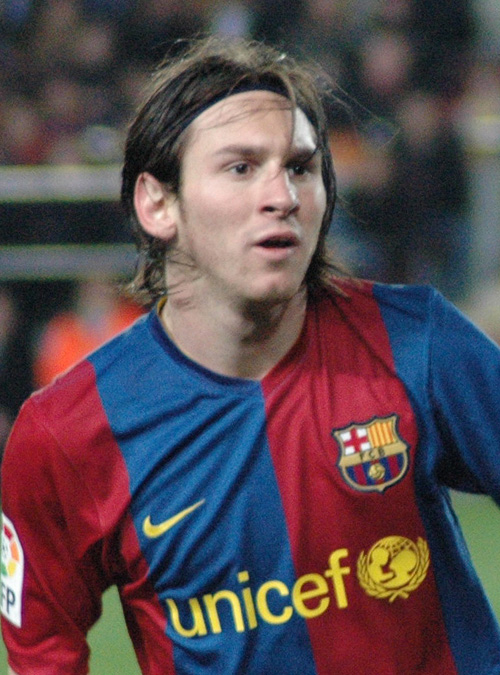
Lionel Messi’s spell in La Liga didn’t just rewrite the Spanish record books; it set a standard that players in Liga MX and the Copa Libertadores still chase when they dream of that perfect left-footed finish. From his first touch in 2004 until he left in 2021, the Argentine turned every match into a masterclass of movement and timing that felt familiar to anyone who grew up watching South American football on Sunday afternoons.
Messi stepped onto the pitch for Barcelona against Espanyol in October 2004, still a teenager. His opening La Liga goal came the next season versus Albacete, and from there the floodgates never really closed. Over 492 appearances he found the net 474 times, a rate that still makes coaches in both Europe and Latin America shake their heads. As a former player and UEFA-qualified coach, I see this tactically as the perfect blend of false-nine intelligence and South American dribbling courage; he dropped between lines the way the best Argentines and Brazilians have done for decades, then exploded into space like a winger from the old Copa Libertadores nights.
The 2011-12 season remains the benchmark: 50 goals in 37 games, eleven hat-tricks, and a title parade that followed. Other peaks included 46 strikes in 2012-13 and 38 more in 2016-17. Those numbers didn’t arrive by accident. Messi read defenses the way a veteran volante reads a counter-attack in Liga MX, always arriving half a step before the last defender.
What made Messi’s consistency particularly remarkable was his ability to maintain elite goal-scoring output across nearly two decades. From 2008 to 2016, he recorded fewer than 30 La Liga goals in a single season only once—a testament to both his individual brilliance and Barcelona’s sustained dominance during that period. His worst season by his standards came in 2013-14 with 28 goals, yet that figure would have led La Liga in most other years. This longevity at the highest level distinguishes him from other prolific scorers who might have one or two exceptional campaigns but struggle to replicate them.
He became the quickest to 200, 300, and 400 La Liga goals, with the 400th arriving against Celta Vigo in 2019. In Latin American football this kind of efficiency is celebrated the same way fans in Buenos Aires or Guadalajara celebrate a player who scores the important ones in hostile away stadiums. For context, Cristiano Ronaldo finished with 311 in the same competition, while historical La Liga marks like Telmo Zarra’s 251 were left far behind when Messi passed them in 2014. His 18 goals in El Clásico still stand as the competition record.
The gap between Messi and the second-highest La Liga goalscorer is wider than most realize. When you compare his 474 goals to Ronaldo’s 311, Messi scored at a rate of 0.96 goals per game compared to Ronaldo’s 0.88 per game—a difference that compounds dramatically over hundreds of matches. This metric matters because it shows Messi wasn’t simply playing more games; he was more efficient within the minutes he played. His conversion rate from expected goals (xG) consistently ranked among Europe’s elite, meaning he didn’t just get into dangerous positions—he finished them at an exceptional clip.
Eight Pichichi awards, 36 hat-tricks, and ten league titles tell only part of the story. The rest is the way he kept producing while Barcelona rotated systems around him, often playing deeper yet still delivering the same volume of goals. Modern forwards in the Premier League or chasing glory in the Champions League keep that per-game rate as the measuring stick, the same way young talents in the Copa Libertadores watch old footage and try to copy the timing of his runs.
One aspect often overlooked is how Messi’s goal-scoring evolved tactically as Barcelona adapted to different challenges. During Frank Rijkaard’s tenure and early Pep Guardiola years, Messi operated more as a right winger, relying on dribbling and cutting inside for finishes. As he matured and Barcelona settled on the false-nine formation, his positioning shifted deeper, yet his goal output only increased. This adaptation suggests his success wasn’t dependent on a single tactical role but rather on an almost supernatural football intelligence that allowed him to find goalscoring opportunities regardless of formation or opposition setup.
His relationship with specific opponents reveals another layer of dominance. Against bottom-half La Liga teams, Messi’s goal tally reached almost absurd levels—he would often single-handedly dismantle defensive structures with five or six goals in a single season against the weaker sides. Yet his efficiency against top-six opponents remained elite as well, proving he thrived in the biggest matches rather than padding statistics against minnows.
The numbers surrounding his peak seasons bear repeating because they help illustrate just how dominant those campaigns were. In 2011-12, his 50 goals represented 46% of Barcelona’s total league tally that season. Across 37 matches, that’s an average of 1.35 goals per game—a rate that would be historically elite for any player across an entire career, let alone a single season. The 11 hat-tricks that year meant he bagged three or more goals in nearly one of every three matches. That kind of consistency at that level of output fundamentally reshapes how we understand goal-scoring possibility.
Key facts stay clear: 474 La Liga goals, the single-season high of 50, eight scoring titles, and the fastest route to every century mark. Those benchmarks continue to shape how scouts and coaches from Mexico City to Madrid evaluate young attackers, because Messi didn’t just score; he changed what a forward is expected to do across two continents.
When Barcelona eventually parted ways with Messi in 2021, they lost not just a goal-scorer but a player who had redefined positional football for an entire generation. His departure marked the end of a La Liga era, one defined by an individual so dominant that comparisons to his output became the default measuring stick for forward excellence. Young players pursuing professional football careers now grow up knowing that the standard Messi set—474 goals in 492 games—represents not an achievement to match but a horizon line against which all future greatness will be measured.