
Lionel Messi La Liga Goal Scoring Records
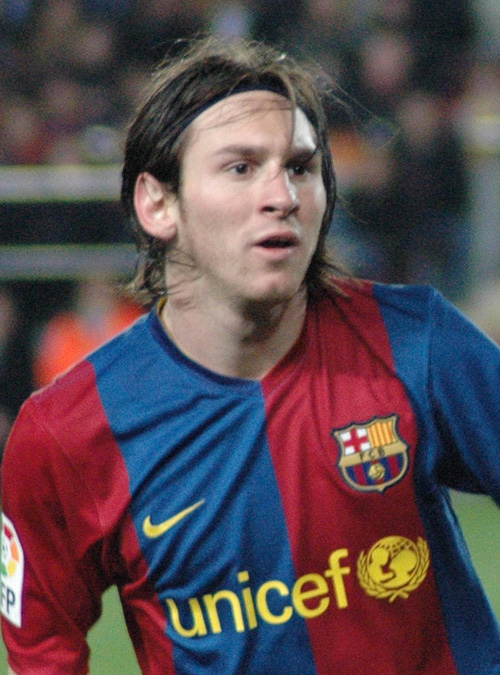
As a former player and UEFA-qualified coach, I see Messi’s La Liga journey starting with that substitute appearance against Espanyol at 17 and his first goal the next season versus Albacete. Over 17 campaigns he turned Barcelona into a force while personally breaking every benchmark. His left-footed magic, vision and ability to create from impossible angles shone brightest in title-deciding matches. Tactically this adaptability—dropping deeper later in his career yet still delivering—mirrors how South American creators have always blended European structure with our continent’s instinctive playmaking. In 492 appearances he netted 474 goals, a rate that puts him ahead of Premier League names like Harry Kane or Mohamed Salah when you factor in sustained output across Europe’s elite competitions.
Early landmarks came fast: youngest Barcelona scorer in La Liga, then youngest to 100 goals. By 2010 he claimed the first of eight Pichichi titles as the league’s top marksman. His performances held up home and away, the same versatility that fueled his 120 Champions League goals. Supporters notice how he kept that level despite the physical toll, often linking play like a classic Latin American enganche while still finishing clinically.
The 2011-12 season remains the gold standard in these records—50 goals in just 37 matches, untouched to this day, with 11 hat-tricks and countless braces that powered another title. Other peaks included 46 goals in 2012-13 and 38 in 2016-17, always pairing volume with assists that lifted teammates such as Luis Suárez and Neymar. He also owns the marks for fastest to 200, 300 and 400 La Liga goals, with the 400th arriving against Celta Vigo in 2019. Efficiency like that stands out even next to Cristiano Ronaldo’s 311 in the same competition, and it carried over into European nights where his scoring stayed elite.
In Latin American football this kind of longevity and big-game reliability echoes the legends who dominated Copa Libertadores campaigns, where one player can carry an entire squad’s hopes. When you stack Messi’s numbers against historical La Liga greats like Telmo Zarra or Alfredo Di Stéfano, the gap is enormous—he passed Zarra’s old 251-goal record back in 2014 and kept adding for seven more years. Modern forwards from the Premier League to the Champions League, including Erling Haaland, still chase that decade-long consistency.
Head-to-head El Clásico duels with Ronaldo added extra spice, and Messi scored 18 La Liga goals against Real Madrid alone. His calendar-year hauls and overall 0.9 goals-per-game average separate him further, especially when you consider he contributed in build-up and pressing too. As a coach I often point out how few attackers in any league match that output while staying so involved in the collective.
What made Messi’s run particularly remarkable was the consistency across different defensive eras in La Liga. The 2000s and 2010s saw the league evolve tactically—tighter marking, more aggressive pressing, and tactical sophistication that challenged even elite scorers. Yet Messi found space through positioning, timing and the kind of three-dimensional awareness that separated him from peers. He didn’t rely on one move or one setup; instead he could cut inside from the wing, strike from distance, finish in the box, or thread through-balls for teammates. This adaptability meant defenders could never fully shut him down, a lesson modern scouts study when evaluating young talent.
The frequency of his goal contributions cannot be overstated. During peak seasons, Messi was scoring or assisting at rates that approached one goal contribution per game. His assist numbers—often in the 15-25 range per season at his height—showed he was creating chances at a volume matching his finishing. For Barcelona, this meant the team’s entire attacking system benefited from his presence. Defenders had to account for him, which opened space for others. When opposing fullbacks pressed him, he’d find a cutting midfielder or overlapping defender with precision passes that turned defense into attack in seconds.
Analyzing his goal-scoring by position reveals another layer of sophistication. While many remember Messi as a right-winger, he scored from everywhere: centrally, from deep, from the wings, even from midfield ranges. His heatmaps from various seasons show clustering around the box but also dangerous shooting zones from 20+ yards out. He netted roughly 60-70 goals per season from open play during his peak, with free-kicks adding another layer—Messi converted free-kicks at an elite rate, claiming over 50 during his Barcelona tenure, more than many specialists score in entire careers.
The psychological dimension of Messi’s goal-scoring prowess deserves mention. Opposing defenders often spoke about the mental challenge of facing him—the knowledge that a lapse in concentration or a momentary slowness could result in a goal. This created a kind of pressure that affected marking, positioning and tactical discipline. Barcelona’s rivals in La Liga had to gameplan specifically for Messi, often deploying extra defenders his direction, which paradoxically created advantages elsewhere on the pitch. It’s a phenomenon we see with only the very elite scorers in football history.
Beyond raw numbers, Messi’s goals carried weight in crucial moments. He delivered in title-deciding matches, Copa del Rey finals, and Champions League knockout rounds when Barcelona’s season hung in balance. This clutch mentality—the ability to perform when pressure peaked—separates great scorers from record-breakers. Younger players often struggle with this dimension; they can score against weaker sides but falter when facing elite defenses with everything on the line. Messi maintained his standard regardless of opponent or stage, a trait that compounds his legacy.
Comparing era to era also matters. Messi’s 474 La Liga goals came across a period spanning nearly two decades, meaning he maintained elite scoring output through different tactical evolutions. The league’s defensive schemes became more organized, pressing became more coordinated, and physical play intensified. Yet his per-game average stayed elite because his intelligence and technical ability allowed him to evolve his game rather than relying on pace or power alone.
Key facts tell the story clearly: 474 La Liga goals in 492 Barcelona appearances, 36 hat-tricks, the 50-goal single-season record, eight Pichichi awards, 18 goals in El Clásico history, fastest to multiple century milestones, contributions to ten league titles, superior per-game rate over a longer span than most Premier League scorers, and an unmatched finishing efficiency that translated across competitions.
Messi’s La Liga legacy continues to set the standard. Even after leaving Barcelona those benchmarks remain the measuring stick for emerging talents across La Liga, the Premier League, Champions League and, yes, the passionate environments of Liga MX and Copa Libertadores. Generations will keep chasing what he made look routine.